About MUJIThree Principles in ManufacturingAbout the Advisory BoardProduct ArchivesArchivesNewsOur BusinessesMUJI BusinessesProduct Development and RetailAccommodationsFood ServicesCommunity EngagementArchitecture and Spatial DesignOther BusinessesIDÉE BusinessesCorporate InformationMessage from the PresidentOur Corporate PurposeThe Journey of Ryohin KeikakuCorporate ProfileLocationManagementGroup CompaniesThe Ryohin Keikaku Group by the NumbersOur HistoryStore Opening DataAwardsArchivesArticlesInvestor RelationsIR NewsLatest MaterialsIR CalendarMessage to Individual InvestorsIf you Become a Shareholder...EventsShareholders Special Benefit ProgramsCompany InformationManagement PolicyCorporate GovernanceIR PolicyFinancial InformationSummary of Financial ResultsFinancial HighlightsMonthly Sales FlashCredit Ratings and BondsStock InformationBasic Stock InformationStock Price InformationShareholder StatusGeneral Meeting of ShareholdersDividends / Shareholder ReturnsAnalyst CoverageArticles of Incorporation電子公告Tax PolicyIR LibraryLatest IR MaterialsConsolidated Financial ResultsData BookFinancial Results BriefingSecurities ReportConvocation Notice and Reports of Shareholders MeetingIntegrated ReportIR Briefing SessionDisclaimerIR registrationIR FAQContact us regarding IRSustainabilityIntegrated ReportESG DataMessage from the PresidentRyohin Keikaku and SustainabilityBasic Policy and ESG Management StructureMaterial Issues and IndicatorsOur PoliciesOur Approach to Product DevelopmentTopicsSustainability NewsRespect for the EnvironmentEnvironmental ManagementResponse to Climate ChangeResource CirculationThe "Design for Circularity" Product SeriesWaste ManagementWater Resource ManagementChemical ManagementBiodiversityRaw Material ProcurementEngagement with SocietyRespect for Human RightsHuman Rights Policy and Internal FrameworkHuman Rights Due DiligenceGrievance MechanismRespect for ColleaguesHuman Capital StrategyWorkplace Safety and Employee HealthMaintaining a Positive Work EnvironmentRespect for DiversityHuman Resource Development and Career DevelopmentCo-Owned Management and EngagementBasic Policy on Harassment from CustomersSupply Chain ManagementCode of Conduct for Production PartnersMonitoring Production PartnersList of Production PartnersSupplier HotlineIndirect ProcurementCustomer Safety and Peace of MindCustomer FeedbackQuality and SafetyFood-Related Responsibilities to CustomersAs a Community Center Activities at StoresRegions and CommunitiesSocial Impact AssessmentGovernancePublic Interest and People-Centered ManagementStakeholder EngagementCorporate Governance Policy and SystemAssessment of Effectiveness of the Board of DirectorsInternal ControlComplianceRisk ManagementInformation Security and Protection of Personal InformationParticipating in InitiativesExternal EvaluationsDonations and AssistanceTopRecruitOnline StoreContactメインナビゲーションメニューを閉じるメニューを開くAbout MUJIThree Principles in ManufacturingAbout the Advisory BoardProduct ArchivesArchivesNewsOur BusinessesMUJI BusinessesProduct Development and RetailAccommodationsFood ServicesCommunity EngagementArchitecture and Spatial DesignOther BusinessesIDÉE BusinessesCorporate InformationMessage from the PresidentOur Corporate PurposeThe Journey of Ryohin KeikakuCorporate ProfileLocationManagementGroup CompaniesThe Ryohin Keikaku Group by the NumbersOur HistoryStore Opening DataAwardsArchivesArticlesInvestor RelationsIR NewsLatest MaterialsIR CalendarMessage to Individual InvestorsIf you Become a Shareholder...EventsShareholders Special Benefit ProgramsCompany InformationManagement PolicyCorporate GovernanceIR PolicyFinancial InformationSummary of Financial ResultsFinancial HighlightsMonthly Sales FlashCredit Ratings and BondsStock InformationBasic Stock InformationStock Price InformationShareholder StatusGeneral Meeting of ShareholdersDividends / Shareholder ReturnsAnalyst CoverageArticles of Incorporation電子公告Tax PolicyIR LibraryLatest IR MaterialsConsolidated Financial ResultsData BookFinancial Results BriefingSecurities ReportConvocation Notice and Reports of Shareholders MeetingIntegrated ReportIR Briefing SessionDisclaimerIR registrationIR FAQContact us regarding IRSustainabilityIntegrated ReportESG DataMessage from the PresidentRyohin Keikaku and SustainabilityBasic Policy and ESG Management StructureMaterial Issues and IndicatorsOur PoliciesOur Approach to Product DevelopmentTopicsSustainability NewsRespect for the EnvironmentEnvironmental ManagementResponse to Climate ChangeResource CirculationThe "Design for Circularity" Product SeriesWaste ManagementWater Resource ManagementChemical ManagementBiodiversityRaw Material ProcurementEngagement with SocietyRespect for Human RightsHuman Rights Policy and Internal FrameworkHuman Rights Due DiligenceGrievance MechanismRespect for ColleaguesHuman Capital StrategyWorkplace Safety and Employee HealthMaintaining a Positive Work EnvironmentRespect for DiversityHuman Resource Development and Career DevelopmentCo-Owned Management and EngagementBasic Policy on Harassment from CustomersSupply Chain ManagementCode of Conduct for Production PartnersMonitoring Production PartnersList of Production PartnersSupplier HotlineIndirect ProcurementCustomer Safety and Peace of MindCustomer FeedbackQuality and SafetyFood-Related Responsibilities to CustomersAs a Community Center Activities at StoresRegions and CommunitiesSocial Impact AssessmentGovernancePublic Interest and People-Centered ManagementStakeholder EngagementCorporate Governance Policy and SystemAssessment of Effectiveness of the Board of DirectorsInternal ControlComplianceRisk ManagementInformation Security and Protection of Personal InformationParticipating in InitiativesExternal EvaluationsDonations and AssistanceTopRecruitOnline StoreContactメインナビゲーションメニューを閉じるメニューを開く
In order to mitigate the impact of climate change on the natural environment and society, the Ryohin Keikaku Group recognizes the challenges related to climate change as a key issue and supports the goal established in the Paris Agreement of limiting the average temperature increase to 1.5°C. The Group has set reduction targets and is promoting activities to achieve these targets through engagement with its supply chain and participation in international initiatives. The Group has set a target of reducing its total greenhouse gas emissions (Scope 1 and 2) by 50% by 2030/8 compared with 2021/8. We also aim to achieve 100% renewable energy for the electricity consumed by our business activities, 100% renewable energy adoption in stores and installation of solar panels on 100% of store facilities in order to reach our renewable energy goal by 2030/8. Furthermore, the Group is committed to not funding climate change denial activities or lobbying against climate regulations, and will not make investments related to fossil-fuel expansion.
The Ryohin Keikaku Group also collaborates with its business partners to promote energy conservation, reduce greenhouse gas emissions and improve energy efficiency throughout the entire lifecycle of its stores, supply chains, products, services and activities.
In addition, we recognize the importance of disclosing climate-related financial information and are committed to understanding the impact of climate-related risks and opportunities on our business, developing and implementing strategies accordingly, and working to expand information disclosure in line with the TCFD framework.
Targets: Reduce absolute global Scope 1 and 2 GHG emissions 50% by 2030/8 from 2021/8 baseline.
Unit: t-CO2e Scope: Ryohin Keikaku Group
Scope
Item
2021/8
2022/8
2023/8
2024/8
2025/8
Scope 1
Scope 1 emissions
1,082
1,278
1,355
1,450
1,905
★
HFC emissions
15
64
63
52
84
★
Scope 2
Market based
59,096
64,557
75,658
73,744
72,074
★
Location based
62,344
66,250
78,025
92,713
104,787
★
Market-based Scope 1 and 2 emissions
60,177
65,835
77,013
75,194
73,979
★
% change from base year
Base year
109.4%
128.0%
125.0%
122.9%
Carbon intensity: t-CO2e/Square metre (m2)
0.0569
0.0547
0.0541
0.0453
0.0392
Change in carbon intensity (in t-CO2e/m2 with 2021 baseline), %
Base year
96%
95%
80%
69%
Scope 1 and 2 coverage: Ryohin Keikaku Group directly managed stores (MUJI, Café&Meal MUJI, Café MUJI, IDÉE), offices, logistics centers, MUJI campsites and other facilities.
Scope 1 and 2 energy consumption: When information about energy consumption cannot be obtained from the property management company or other sources, estimates are made based on energy consumption per unit area.
Scope 1 emission factors: The calculation methods and emission factors under the Ministry of the Environment, Government of Japan’s accounting, reporting and disclosure system are used for both Japan and other countries.
Scope 2 market-based emissions: When information about the power supplier cannot be obtained from the property management company or other sources, emission factors of local electricity retailers are used for calculation.
Scope 2 location-based emissions: Adjusted emission factors by electricity providers are used for Japan, and the latest (annual) version of the IEA Emission Factors are used for other countries.
Unit: t-CO2e Scope: Ryohin Keikaku Group
Scope
Category
2021/8
2022/8
2023/8
2024/8
2025/8
Scope 3
1. Purchased goods and services
897,685
998,450
1,244,281
1,293,127
1,488,649
★
2. Capital goods
52,127
78,125
77,451
116,057
93,407
3. Fuel- and energy-related activities not included in Scope 1 or Scope 2
10,078
11,525
13,371
15,268
17,965
4. Upstream transportation and distribution
77,680
80,063
78,697
81,939
94,645
5. Waste generated in operations
2,194
2,169
2,250
2,440
2,348
6. Business travel
3,106
4,964
7,230
12,323
15,643
7. Employee commuting
6,557
6,138
6,783
8,787
11,016
8. Upstream leased assets (included in Scope 1 or Scope 2)
-
-
-
-
-
9. Downstream transportation and distribution (included in Category 4)
-
-
-
-
-
10. Processing of sold products (Not applicable)
-
-
-
-
-
11. Use of sold products
127,041
98,215
119,001
169,799
170,581
12. End-of-life treatment of sold products
88,814
106,352
107,646
86,366
95,039
13. Downstream leased assets (Not applicable)
-
-
-
-
-
14. Franchises
4,890
5,855
6,311
6,521
8,655
15. Investments (Not applicable)
-
-
-
-
-
Scope 3 Total
1,270,173
1,391,856
1,663,021
1,792,628
1,997,947
Our greenhouse gas (GHG) emissions data have been subject to third-party verification for each fiscal year since FY2021. The data for FY2025, indicated with ★, have been assured by the Japan Management Association GHG Certification Center. For details of the verification statement, please refer to the ESG Data section of our website.
Percentage of electricity consumption from renewable sources
1.9%
2.3%
2.3%
22.4%
34.1%
Total
139,285
157,591
183,386
215,636
249,551
Our energy usage data have been subject to third-party verification for each fiscal year since FY2024. The data for FY2025, indicated with ★, have been assured by the Japan Management Association GHG Certification Center. For details of the verification statement, please refer to the ESG Data section of our website.
The Ryohin Keikaku Group is working to reduce greenhouse gas emissions not only on its own, but also in cooperation with members of its supply chain and production partners to promote energy conservation and to utilize renewable energy sources.
Ryohin Keikaku Initiatives
MUJI Energy established as a Renewable Energy Power Generation Company
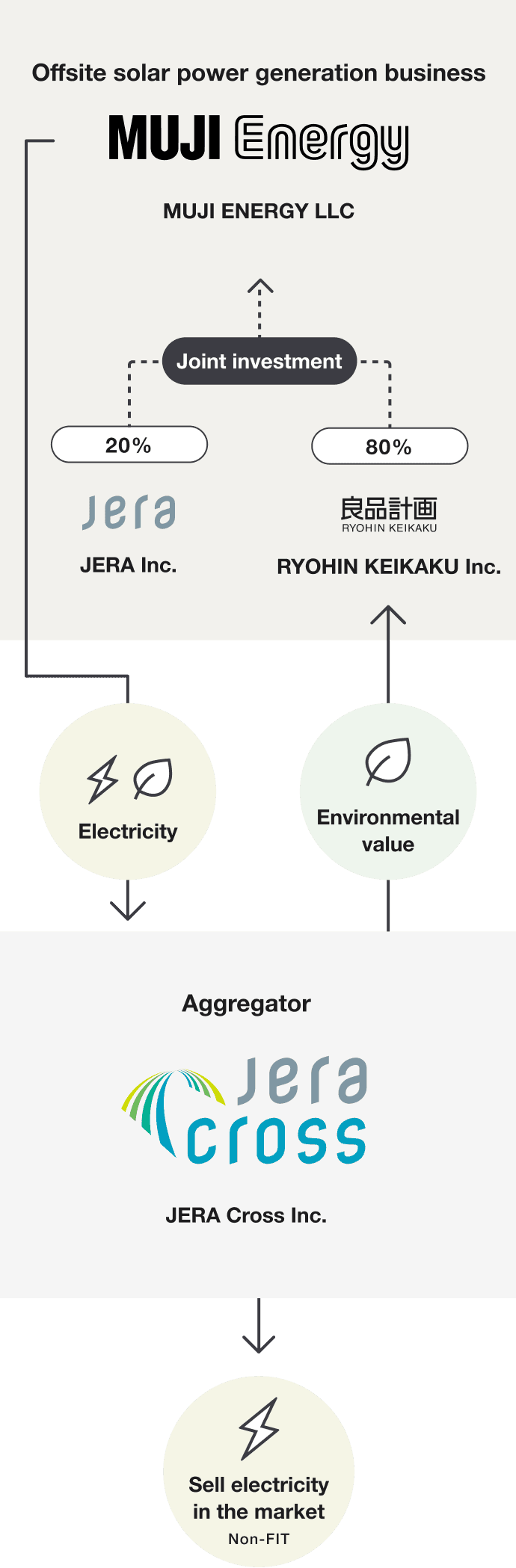
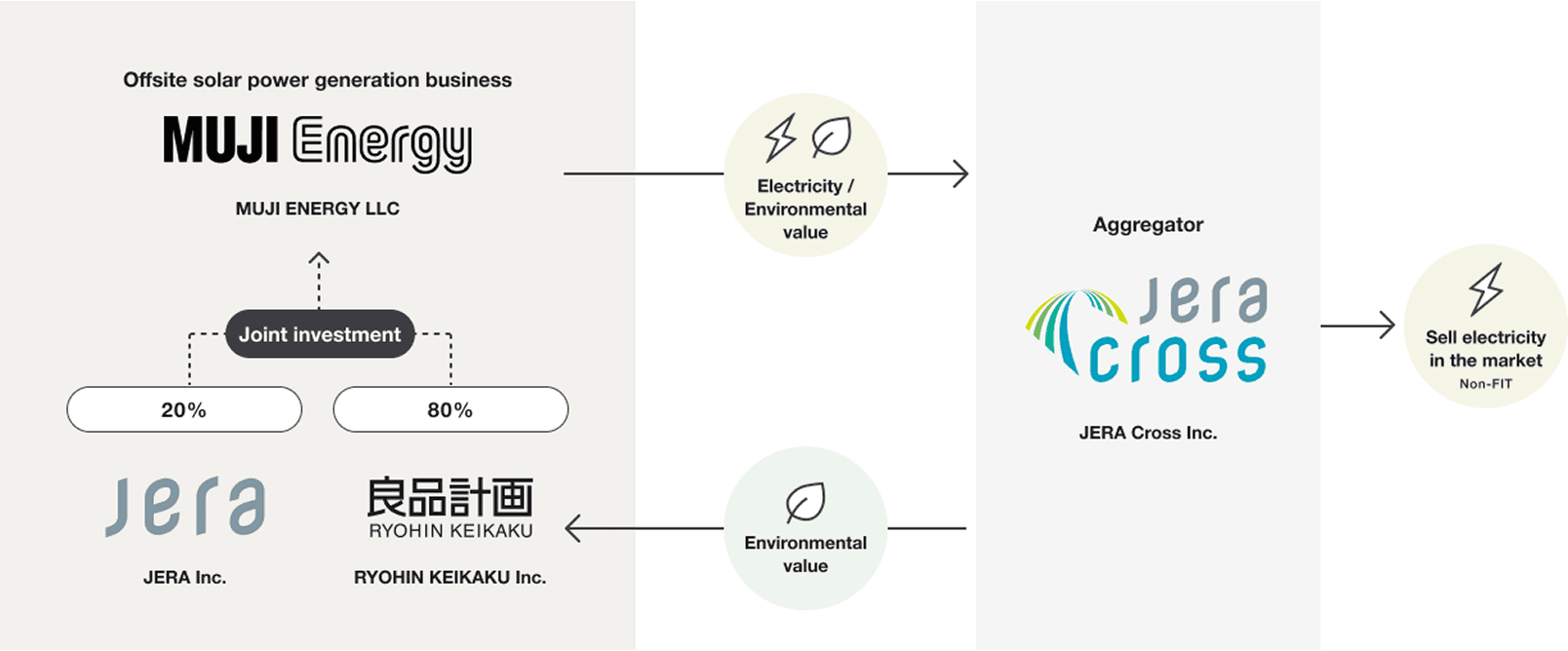
In June 2025, Ryohin Keikaku announced that it will establish MUJI Energy LLC, a special purpose company to engage in the renewable energy power generation business, including the development of solar power generation facilities, in a joint venture with JERA Co., Inc. The environmental value and electricity generated from solar power through MUJI Energy will be purchased by JERA Cross Co., Inc. The electricity will then be supplied to Japan Electric Power Exchange (JEPX), and all of the environmental value will be acquired by Ryohin Keikaku. Ryohin Keikaku will utilize the environmental value to reduce CO2 emissions associated with electricity consumption in its business activities, including at MUJI tenant stores and other locations. MUJI Energy plans to develop approximately 13 MW of power generation capacity within one year of establishment. This is equivalent to 20% of MUJI’s annual electricity consumption and it is expected to reduce CO2 emissions by approximately 8,000 t per year.
Utilizing Carbon Footprint of Products (CFP)
The carbon footprint of products (CFP) is a measure that quantifies the greenhouse gases emitted through all parts of the product lifecycle, from raw material procurement to manufacturing, disposal and recycling. It is given as a CO2 equivalent. We are calculating CFP and plan to utilize it in improving the raw material procurement and manufacturing processes as one metric for evaluating the lifecycle of products.
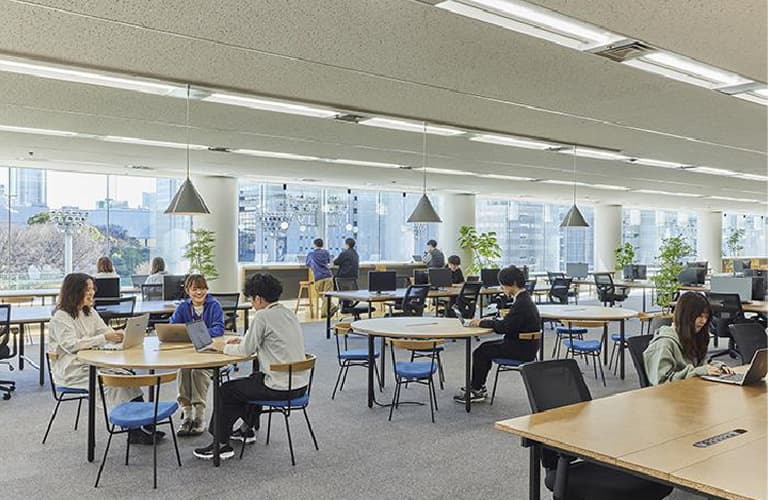
In February 2024, our headquarters was relocated to a building that received four stars in the DBJ Green Building certification (as of December 2023).
Stores
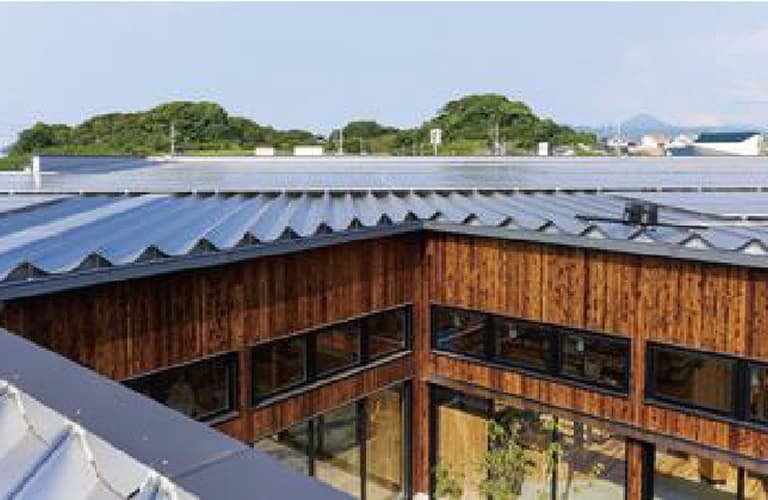
In our stores, except for a few exceptions, we encourage store members to leave within 30 minutes after closing time to save energy. In addition, we promote the use of LED lighting and make efforts to conserve energy by limiting the use of indirect lighting that does not have a direct impact on store operations. In addition, we have been installing solar power generation systems in some of our stores since 2023/8.
Distribution Centers
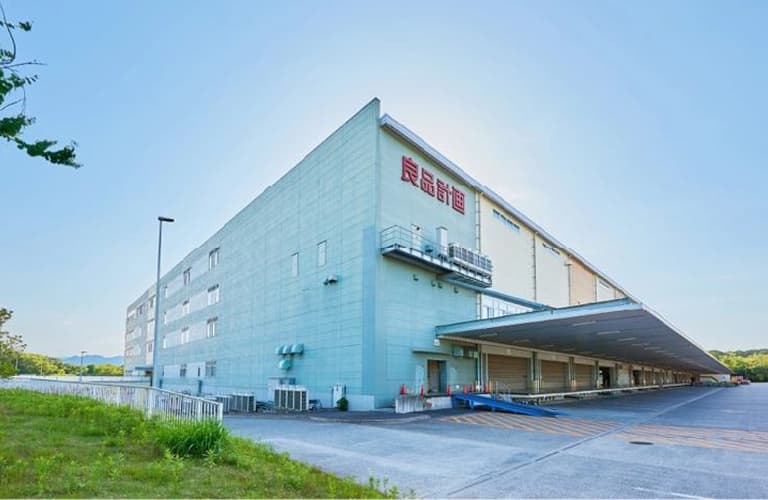
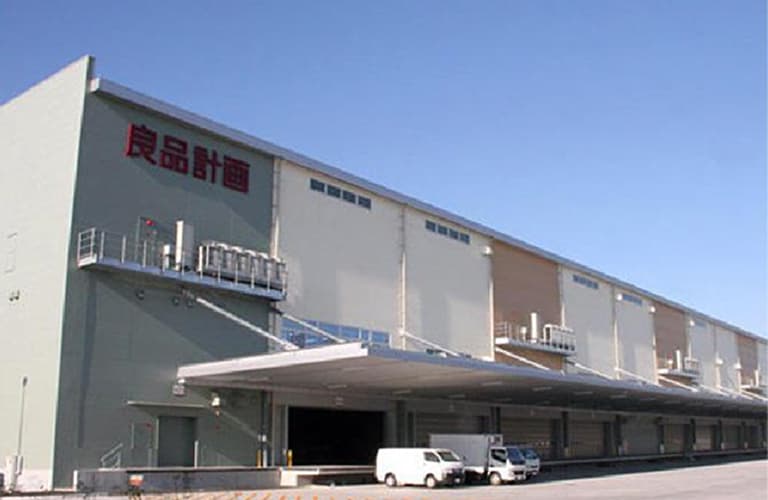
The Hatoyama Distribution Center has 1,400 kW solar panels on the roof. These solar panels can generate electricity equivalent to the annual power consumption of around 228 general households. We expect to reduce annual carbon dioxide emissions by around 494 t, an effect equivalent to creating around 72 ha of a broadleaf forest.
Campsites
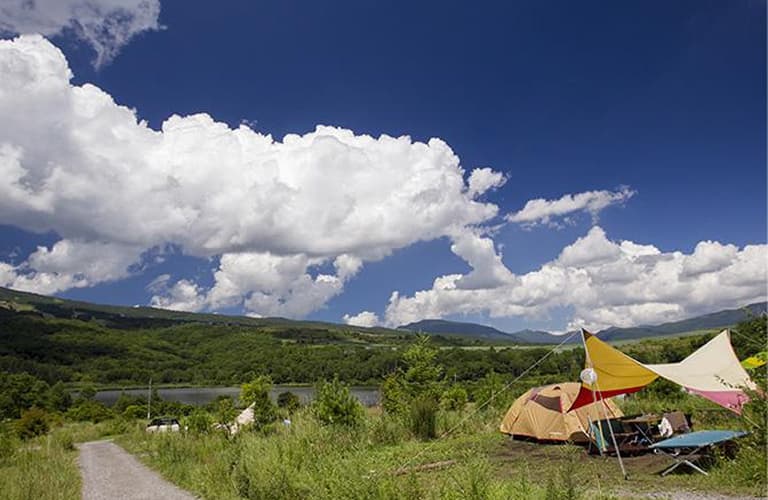
At Ryohin Keikaku’s two campgrounds in Tsunan-cho (Niigata Prefecture) and Tsumagoi-mura (Gunma Prefecture), we manage and conserve forest around the campgrounds in a near-natural state, contributing to the absorption of CO2 through the carbon fixation of trees. We also organize outdoor classes for residents and summer camps for kids to deepen their understanding of nature.
Our measures to ensure the safety of our employees in the event of a natural disaster include the introduction of a system (smartphone application) that enables employees to quickly report their situation. In order to improve the effectiveness of our measures, we regularly conduct safety confirmation drills and lectures on initial responses to disasters. Headquarters stockpiles food on a rolling stock basis, and stores are equipped with flashlights and other emergency supplies. In addition, based on the concept of “incorporating preparedness into everyday life” for employees as well as the community as a whole, we are working to raise awareness of disaster prevention together with local residents by developing products and holding ITSUMO MOSHIMO events.
Supply Chain Initiatives
Logistics
To reduce GHG emissions and environmental impact, Ryohin Keikaku is actively pursuing initiatives such as the reuse of logistics equipment and promotion of improved transportation efficiency.
1. Delivery and shipment from the warehouse without using slips
We carry out the delivery of almost all products and the shipment of products to directly managed stores from the warehouse without using slips.
2. Delivery by returnable containers
Returnable containers have been introduced for delivery to stores and are reused between stores and distribution centers.
3. Use of ships
We are working to reduce CO2 emissions by delivering products to stores in Hokkaido and Okinawa using ships.
4. Improvement of the loading rate for deliveries to stores and optimization of the number of deliveries
In addition to increasing the loading rate, we are work to optimize the number of product supplies (deliveries) to all stores by establishing a standard for the quantity of products to be delivered and by reducing the number of delivery days for stores with a small amount of the total supply of products.
5. Shortening of travel distance by sending products directly from the manufacturing factories to customers
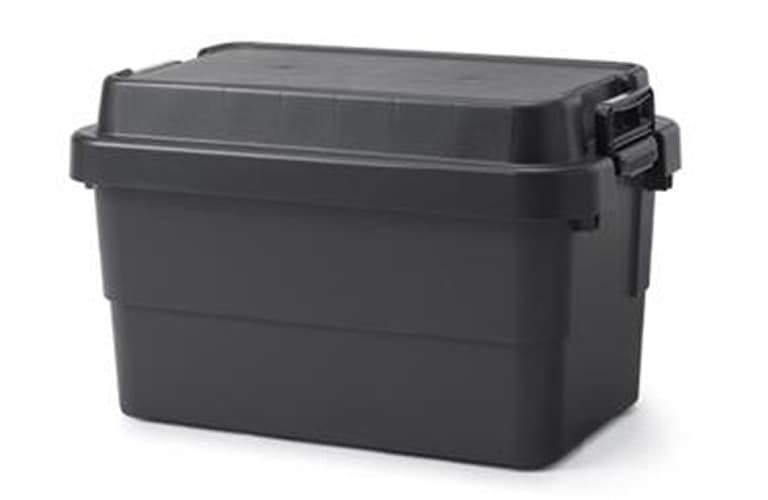
Polypropylene storage products and MUJI Beads Sofa, which are products that are representative MUJI items, can be delivered directly from manufacturing factories to customers, shortening the travel distance. This also reduces the chance of product damage during delivery.
6. Reuse of corrugated cardboard boxes used for supply to stores
We have introduced a system to collect some of the cardboard and used paper generated by our distribution centers and recycle it into cardboard for use in supplying our stores.
7. Reduction of transport distance by trucks from domestic distribution centers to stores
We transferred our inventory base for clothing and miscellaneous goods from Niigata to Saitama in 2014 with the establishment of the Hatoyama Center, effectively moving our logistics center closer to consumption areas and shortening the truck transport distance within the Kanto region where stores are concentrated.
8. Operation of global distribution/transit centers
In 2013, we set up a global distribution center in China, one of our production bases, and transferred our product inventory base from Niigata to China. In 2014, we opened a global transit center in the ASEAN region, along with the transfer of the production bases to ASEAN. We are working to streamline marine transport and domestic transport by consolidating products manufactured at multiple factories into the global distribution/transit centers to increase the loading rate of containers.
Production Partners
To advance the reduction of environmental impact across our supply chain from a medium- to long-term perspective, we began leveraging the Higg Index in the FY2026/8. Stewarded and governed by global nonprofit alliance Cascale, the Higg Index helps assess and measure the social and environmental performance of the consumer goods value chain and the environmental impacts of products. While it has been widely used in the apparel and footwear sectors, participation from companies in other industries has also been expanding in recent years. By leveraging the Higg Index and its associated tools on Worldly, we are working with our production partners to share environmental data and information on sustainability initiatives, and to facilitate ongoing dialogue toward reducing environmental impact. Our efforts are being rolled out in phases, with a focus on the following areas:
Understanding and visualizing environmental data such as energy use and greenhouse gas (GHG) emissions
Gaining insight into the initiatives and challenges faced by individual production partners
Engaging in dialogue to set targets for improving energy efficiency and reducing GHG emissions, and to share progress toward those targets
Identifying opportunities for improvement based on data and encouraging actions to reduce environmental impact
Through collaboration with our production partners, we will continue to utilize frameworks such as the Higg Index to enhance transparency and support continuous improvement across our supply chain.
Participation in Industry Organizations and Initiatives
Ryohin Keikaku has been participating as a supporting member of the Japan Sustainable Fashion Alliance (JSFA)—established by the Ministry of the Environment’s “Fashion and Environment” Task Force—since August 2021. The direction of JSFA’s activities aligns with the environmental policy of the Ryohin Keikaku Group. The company regularly exchanges information with other participating companies and is promoting initiatives such as serving as a leading role in the working group that calls for the procurement of green electricity and the introduction of renewable energy in commercial facilities. When necessary, the company also conducts deliberations at the Executive Committee and reports to the Board of Directors. If, during these processes, it becomes clear that the organization’s policies or advocacy efforts do not align with the company’s own strategies, Ryohin Keikaku will engage with the organization to ensure alignment and seek their understanding of the company’s position. In cases where maintaining such alignment proves difficult, the company will consider appropriate actions, including the possibility of withdrawal from the organization.
Response to Climate Change | Ryohin Keikaku Co., Ltd.