About MUJIThree Principles in ManufacturingAbout the Advisory BoardProduct ArchivesArchivesNewsOur BusinessesMUJI BusinessesProduct Development and RetailAccommodationsFood ServicesCommunity EngagementArchitecture and Spatial DesignOther BusinessesIDÉE BusinessesCorporate InformationMessage from the PresidentOur Corporate PurposeThe Journey of Ryohin KeikakuCorporate ProfileLocationManagementGroup CompaniesThe Ryohin Keikaku Group by the NumbersOur HistoryStore Opening DataAwardsArchivesArticlesInvestor RelationsIR NewsLatest MaterialsIR CalendarMessage to Individual InvestorsIf you Become a Shareholder...EventsShareholders Special Benefit ProgramsCompany InformationManagement PolicyCorporate GovernanceIR PolicyFinancial InformationSummary of Financial ResultsFinancial HighlightsMonthly Sales FlashCredit Ratings and BondsStock InformationBasic Stock InformationStock Price InformationShareholder StatusGeneral Meeting of ShareholdersDividends / Shareholder ReturnsAnalyst CoverageArticles of Incorporation電子公告Tax PolicyIR LibraryLatest IR MaterialsConsolidated Financial ResultsData BookFinancial Results BriefingSecurities ReportConvocation Notice and Reports of Shareholders MeetingIntegrated ReportIR Briefing SessionDisclaimerIR registrationIR FAQContact us regarding IRSustainabilityIntegrated ReportESG DataMessage from the PresidentRyohin Keikaku and SustainabilityBasic Policy and ESG Management StructureMaterial Issues and IndicatorsOur PoliciesOur Approach to Product DevelopmentTopicsSustainability NewsRespect for the EnvironmentEnvironmental ManagementResponse to Climate ChangeResource CirculationThe "Design for Circularity" Product SeriesWaste ManagementWater Resource ManagementChemical ManagementBiodiversityRaw Material ProcurementEngagement with SocietyRespect for Human RightsHuman Rights Policy and Internal FrameworkHuman Rights Due DiligenceGrievance MechanismRespect for ColleaguesHuman Capital StrategyWorkplace Safety and Employee HealthMaintaining a Positive Work EnvironmentRespect for DiversityHuman Resource Development and Career DevelopmentCo-Owned Management and EngagementBasic Policy on Harassment from CustomersSupply Chain ManagementCode of Conduct for Production PartnersMonitoring Production PartnersList of Production PartnersSupplier HotlineIndirect ProcurementCustomer Safety and Peace of MindCustomer FeedbackQuality and SafetyFood-Related Responsibilities to CustomersAs a Community Center Activities at StoresRegions and CommunitiesSocial Impact AssessmentGovernancePublic Interest and People-Centered ManagementStakeholder EngagementCorporate Governance Policy and SystemAssessment of Effectiveness of the Board of DirectorsInternal ControlComplianceRisk ManagementInformation Security and Protection of Personal InformationParticipating in InitiativesExternal EvaluationsDonations and AssistanceTopRecruitOnline StoreContactメインナビゲーションメニューを閉じるメニューを開くAbout MUJIThree Principles in ManufacturingAbout the Advisory BoardProduct ArchivesArchivesNewsOur BusinessesMUJI BusinessesProduct Development and RetailAccommodationsFood ServicesCommunity EngagementArchitecture and Spatial DesignOther BusinessesIDÉE BusinessesCorporate InformationMessage from the PresidentOur Corporate PurposeThe Journey of Ryohin KeikakuCorporate ProfileLocationManagementGroup CompaniesThe Ryohin Keikaku Group by the NumbersOur HistoryStore Opening DataAwardsArchivesArticlesInvestor RelationsIR NewsLatest MaterialsIR CalendarMessage to Individual InvestorsIf you Become a Shareholder...EventsShareholders Special Benefit ProgramsCompany InformationManagement PolicyCorporate GovernanceIR PolicyFinancial InformationSummary of Financial ResultsFinancial HighlightsMonthly Sales FlashCredit Ratings and BondsStock InformationBasic Stock InformationStock Price InformationShareholder StatusGeneral Meeting of ShareholdersDividends / Shareholder ReturnsAnalyst CoverageArticles of Incorporation電子公告Tax PolicyIR LibraryLatest IR MaterialsConsolidated Financial ResultsData BookFinancial Results BriefingSecurities ReportConvocation Notice and Reports of Shareholders MeetingIntegrated ReportIR Briefing SessionDisclaimerIR registrationIR FAQContact us regarding IRSustainabilityIntegrated ReportESG DataMessage from the PresidentRyohin Keikaku and SustainabilityBasic Policy and ESG Management StructureMaterial Issues and IndicatorsOur PoliciesOur Approach to Product DevelopmentTopicsSustainability NewsRespect for the EnvironmentEnvironmental ManagementResponse to Climate ChangeResource CirculationThe "Design for Circularity" Product SeriesWaste ManagementWater Resource ManagementChemical ManagementBiodiversityRaw Material ProcurementEngagement with SocietyRespect for Human RightsHuman Rights Policy and Internal FrameworkHuman Rights Due DiligenceGrievance MechanismRespect for ColleaguesHuman Capital StrategyWorkplace Safety and Employee HealthMaintaining a Positive Work EnvironmentRespect for DiversityHuman Resource Development and Career DevelopmentCo-Owned Management and EngagementBasic Policy on Harassment from CustomersSupply Chain ManagementCode of Conduct for Production PartnersMonitoring Production PartnersList of Production PartnersSupplier HotlineIndirect ProcurementCustomer Safety and Peace of MindCustomer FeedbackQuality and SafetyFood-Related Responsibilities to CustomersAs a Community Center Activities at StoresRegions and CommunitiesSocial Impact AssessmentGovernancePublic Interest and People-Centered ManagementStakeholder EngagementCorporate Governance Policy and SystemAssessment of Effectiveness of the Board of DirectorsInternal ControlComplianceRisk ManagementInformation Security and Protection of Personal InformationParticipating in InitiativesExternal EvaluationsDonations and AssistanceTopRecruitOnline StoreContactメインナビゲーションメニューを閉じるメニューを開く
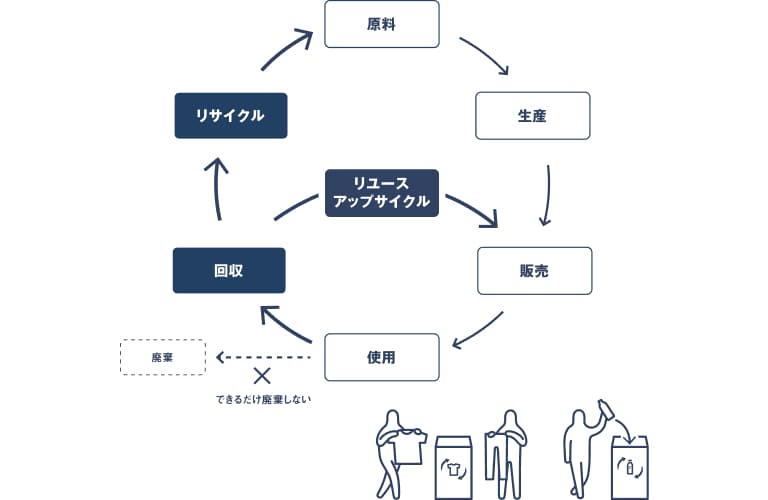
The Ryohin Keikaku Group is aiming to realize a circular and sustainable society in harmony with nature through its products, services and actions. The Ryohin Keikaku Group promotes the efficient use of resources and the reduction of waste in processes ranging from raw material procurement and manufacturing to marketing and post-sales. We actively promote activities such as reducing, reusing, repairing and recycling materials from the standpoint of the Ryohin Keikaku Group, the supply chain and customers, aiming to reduce the environmental impact of products and materials throughout the entire lifecycle.
The Ryohin Keikaku Group aims to contribute to solving issues in society through its businesses. Specifically, the Ryohin Keikaku Group is taking a proactive approach to reducing the use of virgin plastics by collecting plastic products sold and promoting resource circulation, with the goal of achieving 100% reuse of plastic by 2030. In addition, we aim to achieve 100% virgin plastic-free packaging and 100% recyclable product development by 2030.
Management System
The Ryohin Keikaku Group manages and promotes these initiatives in accordance with its environmental management system.
We disclose the progress over time for the following data:
E-07 Amount of textile products collected
E-08 ReMUJI sales
E-09 Amount of plastic products and paper hanger collected
E-10 Amount of waste generated
E-12 Elimination of virgin plastic in packaging and various materials
Risks and Challenges
The Ryohin Keikaku Group recognizes that the procurement of raw materials and the manufacturing and sale of its products rely on many of the planet’s finite resources. The depletion of resources is a critical issue for the sustainability of not just our own businesses, but for the whole planet, and addressing it is a social responsibility of all companies that manufacture and sell products. To further promote the shift to recycling-oriented product development, the Group procures and utilizes recycled materials. We also collect used products and non-standard products to turn them back into resources.
Initiatives
ReMUJI; MUJI’s initiatives for circularity
We collect used MUJI products from customers at our stores to extend the life of resources through “reuse (upcycling)” and “recycling.” We have continuously expanded the range of collected items to include clothing since 2010, skincare PET bottles since 2020, and plastic storage products since 2022, advancing our resource circulation initiatives. Starting in March 2025, we are further strengthening our initiatives for circularity under the unified name “ReMUJI.”
We collect certain products that are no longer needed from customers at MUJI stores, and promote reuse and recycling activities so they can take on new life. Customers who bring in the applicable products (apparel, plastic storage supplies, PET bottles and down duvets) are awarded points in MUJI’s membership program, the MUJI Good Program. We think about every aspect of products through to post-use, and will continue to promote recycling of collected products.
Items
Subjected products
Explanation
Apparel
Clothing sold by MUJI (excluding underwear, socks, shoes, bags, hats and other accessories)
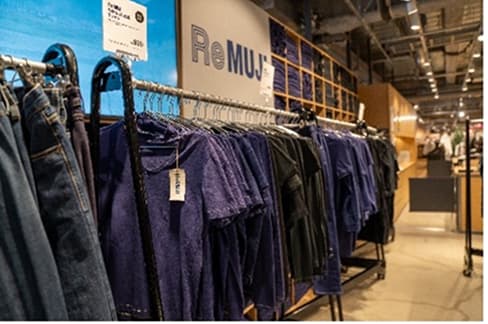
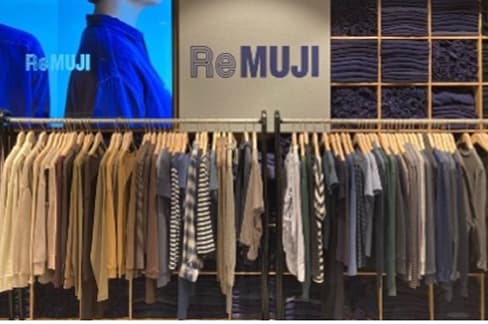
We collect clothing that customers have cherished but no longer need, and the items that are still wearable are then re-dyed and processed for sale as upcycled clothing in Japan.
Plastic storage goods
Polypropylene/polyethylene storage products sold by MUJI
Items that meet our standards are refurbished for resale as second-hand items. Those that do not meet the standards are shredded, cleaned and recycled as raw materials for MUJI products.
Skincare PET bottles
PET bottles of toning water, moisturizing milk, the Booster Essence Lotion series, hair care, body care, room fragrance spray, and My Bottle for Water sold by MUJI
By collecting and recycling PET bottles, we are contributing to the reduction of plastic waste and making effective use of petroleum-based materials.
Down duvets
Down duvets sold by MUJI (excluding polyester duvets and down jackets)
Down duvets are collected and washed for recycling as raw materials.
Body Fit Cushions
Body Fit Cushions sold by MUJI (excluding the cover)
Items that meet our standards for resale are washed and then resold as second-hand items. Those that do not meet the standards are used to make products out of recycled materials.
Note: Please check here for stores that accept used products.
Initiative for the reuse and recycling of clothing
This is an initiative to recycle clothing items that have been used by customers for many years but are no longer needed. The clothes are recycled and given whole new value. In addition to clothing re-dyed with indigo or other colors, ReWashed clothing (items made from difficult-to-dye synthetic fibers that are carefully washed and resold as second-hand clothes) and ReMade clothing (items that have been made by stitching the usable parts of different clothing items together) are sold at some MUJI stores. Apparel and textile products that are unsuitable for upcycling are recycled as raw materials to promote resource circularity. We started these initiatives in 2015, and marked their tenth year in 2025. The amount of clothing collected from customers and the amount resold has increased each year. Through promotional campaigns and expansion of participating stores, we will continue to work on circulation of clothing together with customers.
ReDyed clothing
ReWashed clothing
ReMade clothing
Skincare bottles made from recycled plastic and recycling of collected skincare PET bottles
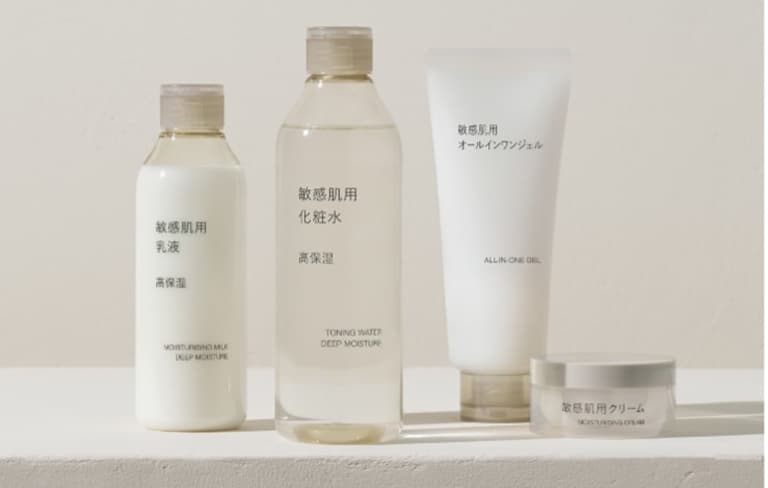
Bottles from the sensitive skincare series, which was renewed in September 2023, have a faint yellow color. By sorting, crushing and washing the used PET bottles, removing surface stains and contaminants, and performing mechanical recycling by treating them at high temperatures, the bottles become yellow but we can ensure no safety issues. Currently, we are using recycled materials in PET bottles for beverages on the market, but we are now advancing efforts to recycle the skincare PET bottles collected in MUJI stores for recirculation into Toning Water bottles. This will help to reduce plastic waste and lead to effective use of petroleum-based resources.
Sensitive skincare Series
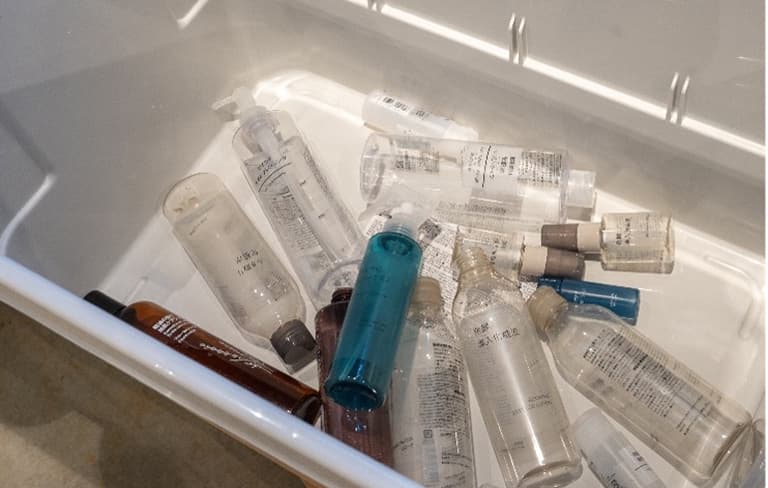
Collection of skincare PET bottles in stores
Collection, Reuse and Recycling of Plastic Products
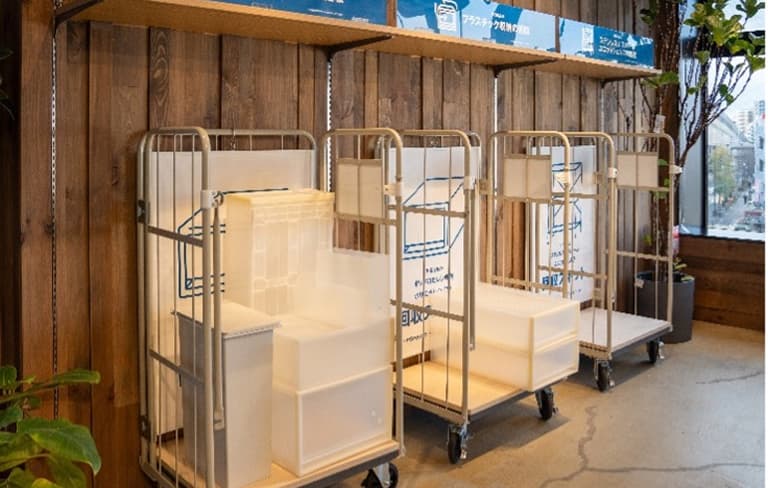
We started collecting used PET bottles in July 2020. By collecting and recycling empty bottles for Toning Water, Moisturizing Milk, and My Bottle for Water, we are reducing plastic waste and making effective use of petroleum-based materials. Since February 2023, we have expanded items available for collection to include a wide range of plastic products, including storage solutions and dust bins. We collect these items regardless of damage, sort them by type, and refurbish those that meet our standards for resale as second-hand items. Items that do not meet the standards are shredded, cleaned, and recycled as raw materials for new MUJI products. Recycling requires a sufficient amount of collected material. From FY2024/8, we have been conducting the time-limited Product Collection Campaign on a regular basis, in which more points than usual are awarded when customers bring in items to donate, encouraging more customers to participate in our efforts. Many customers have participated in the campaign, and the volume of plastic products collected has steadily grown. Moving forward, we will continue to strengthen communication and related initiatives, working together with more customers to realize a circular society.
Collection of plastic storage products at MUJI stores
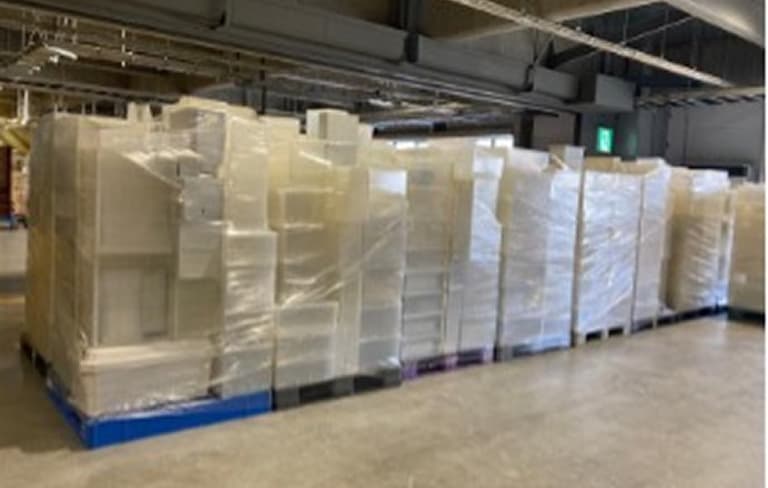
Plastic storage products collected from all over Japan
Mottainai Market
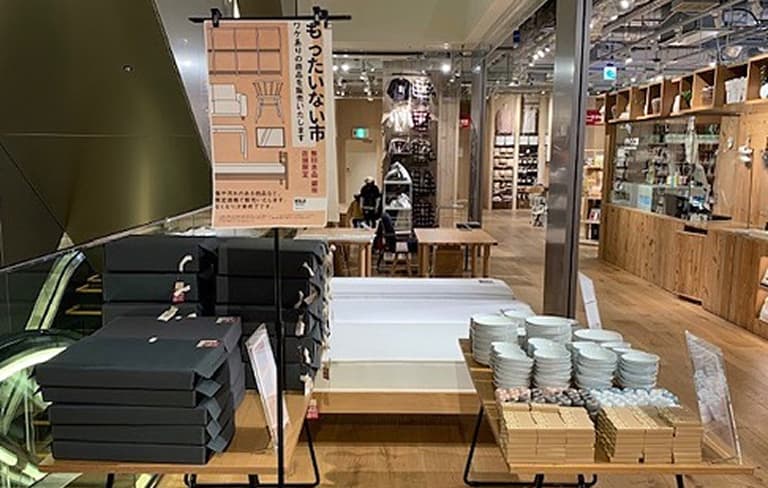
Mottainai Market at MUJI Ginza
Based on the idea that wasting limited resources is, well, wasteful, Mottainai Market is an initiative in which still-very-usable items that might otherwise be thrown away are instead sold to customers at bargain prices. Such products include used and new-old furniture, products that are not suitable for sale to customers due to slight scratches, stains, or other cosmetic defects, and products that were returned after opening. Implemented at certain MUJI stores and the online store, Mottainai Market is an example of our efforts to reuse items, and makes furniture and household goods available for use in everyday life.
The second-hand products are mainly furniture that is no longer used in the monthly subscription-type rental service. After receiving furniture returned from customers, we check its condition, then refurbish it by cleaning it and replacing any worn-out parts to resell it. “New-old” stock are products that were shipped but never used, either due to damage during transport or because of the customer’s circumstances. In addition, we sell non-standard household goods and clothing that do not meet the standards for regular products.
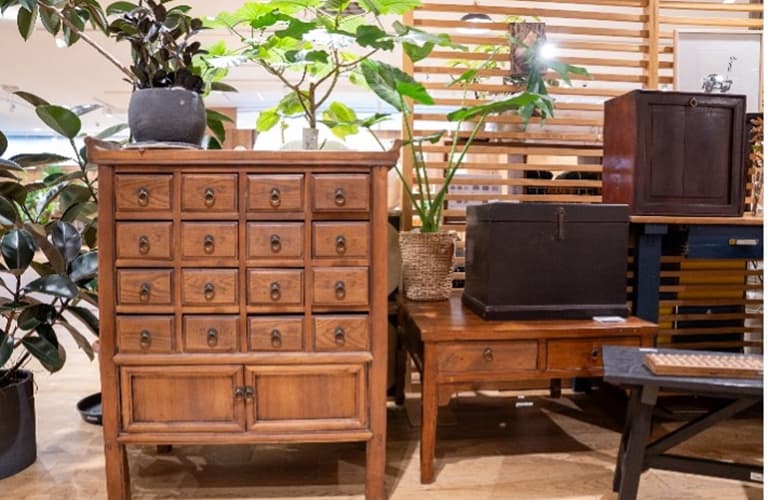
Some of our larger stores began selling used furniture from December 2023. We purchase furniture that has been well cared for by its owners in Japan and overseas, and carry out maintenance such as cleaning, polishing, gluing, realignment and custom part fabrication. Then, after final inspection of the quality, we sell it as used furniture at MUJI stores. Instead of discarding furniture that has fulfilled its role, we carefully restore each piece so it can be passed on and used again by someone else.
Use of recycled materials
As part of product development that emphasizes resource circulation, we are promoting the use of recycled materials such as polypropylene, polyethylene, PET, polyester, paper, nylon, wool and cotton. The containers of MUJI’s skincare series are made from 100% recycled PET materials. In addition, we are working on the development of duvet covers made from recycled polyester from PET bottles.
Development of products made from a single material
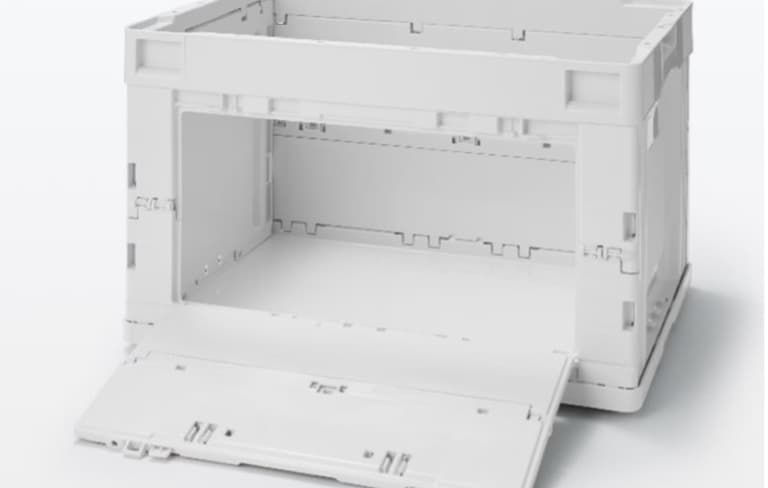
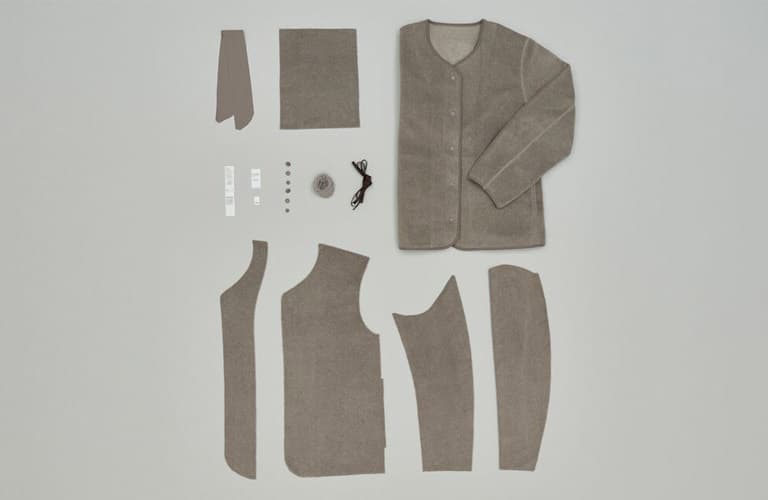
We are working on the development of products that are made from a single material in order to facilitate easier recycling after use. Recycled polypropylene collapsible containers use at least 10% recycled polypropylene sourced from recovered household appliances and office automation equipment*, and are made entirely from a single material including the sides. Our recyclable fleece series uses 100% PET raw materials for all components of the products, from the fabric and accessories, such as buttons, through to the thread. By using 100% recycled PET for the main fabric, primarily sourced from PET bottles, we can reduce environmental impact at the raw material stage. Furthermore, since the design features a single material, separation and sorting are unnecessary during recycling, making it easier to recycle the product after use. The body material is 100% recycled PET using PET bottles as the primary raw material, which reduces the environmental impact in the raw material stage.
*Note: Not limited to MUJI products
Recycled polypropylene collapsible containers
Recyclable fleece series
Review of packaging materials, display- and fixture-related equipment
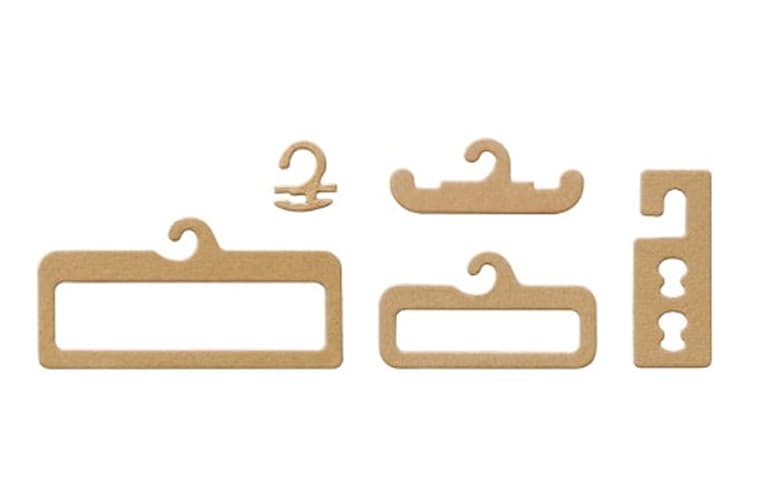
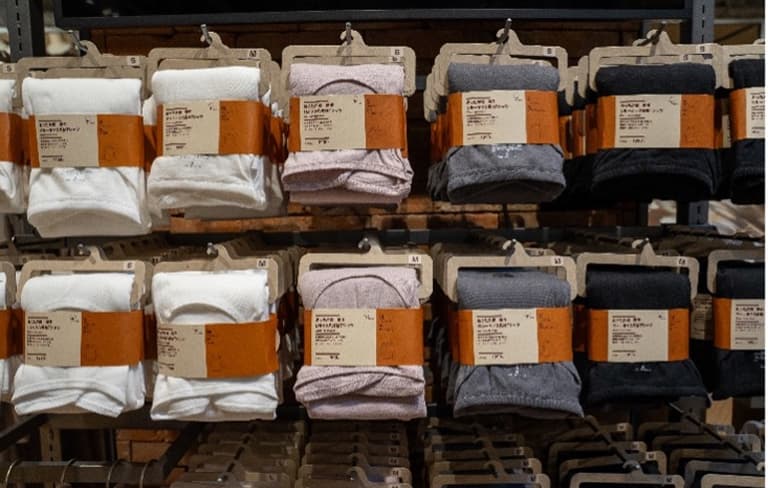
With the aim of recycling resources and reducing waste, we are progressively reviewing the materials used for product packaging and sales floor displays in addition to shopping bags. For example, instead of using plastics, we have used recycled paper for the display hooks of our socks and scarves from the spring/summer 2019 product series. Starting with the fall/winter 2022 product series, we switched to paper display hangers for men’s and women’s underwear. We have also started the collection and recycling of paper hooks and hangers. The paper hooks and hangers collected in stores are processed in partner factories, recycled into paper, and then either reused as display materials in MUJI stores or utilized in paper products of other companies. Through this initiative, we are promoting the circulation of resources that previously would have become household waste. Looking ahead, we will continue to identify all products that require packaging, such as underwear and aroma oil, and work to eliminate the use of plastic in their packaging or replace it with recycled paper and other alternative materials whenever possible. What is more, from autumn/winter 2021 we have gradually replaced the plastic tag loops with paper tag pins made from FSC paper,* including recycled paper. The paper is twisted to keep its strength and can be used as a loop to hold the tag.
*Note: Forest Stewardship Council (FSC): An international certification system for responsible forest management
Paper display materials
Paper packaging
Review of Sales Floor Fixtures
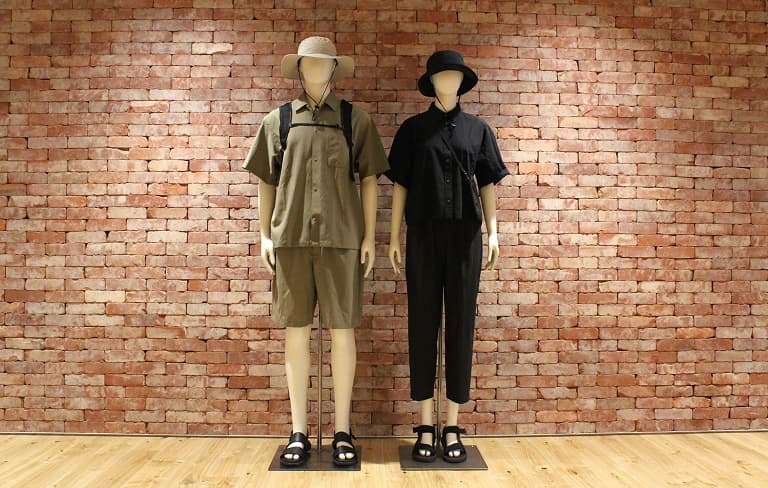
Mannequins made from recycled materials
We are also undertaking a review of sales floor fixtures used in MUJI stores. From June 2024 we began introducing mannequins made from 100% recycled polyethylene, starting at new stores. Using recycled material helps to reduce environmental impact at the raw material manufacturing stage. We also revised the specifications for shipping the mannequins, replacing plastic foam boards and bubble wrap with cardboard as cushioning material to fill the gaps between them.
In other fixtures and equipment as well, we examined each packaging configuration to eliminate excessive packing material, and are making changes to packing material in ways such as switching from virgin plastic to recycled paper and recycled cardboard. We strengthened this effort starting in the fall of 2023, and expect it to reduce the amount of virgin plastic used by approximately 6 t per year.*
*Note: The reduction amount for FY2024/8 was estimated by multiplying the amount of virgin plastics reduced per package of fixtures and equipment by the production volume.